

The Creation Narrative – How Man Became Like God, Knowing Good And Evil
In this fascinating post, Randy talks about how man became like God, knowing good and evil. He discusses the creation narrative, the fall of man, and two trees.
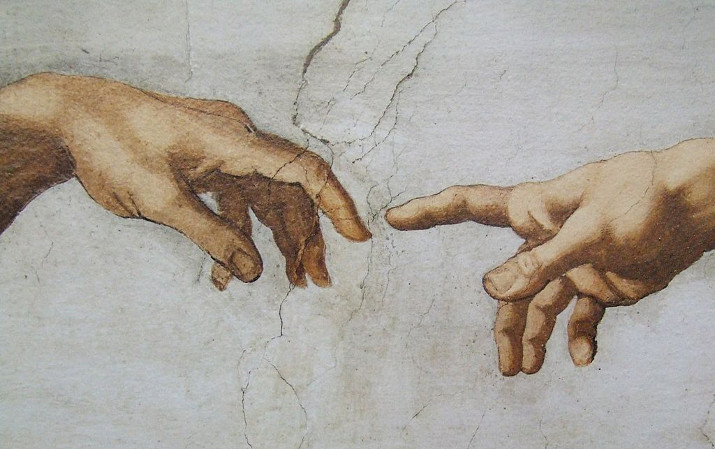
How Could Man Be Like God?
Then the LORD God said, “Behold, the man has become like one of us in knowing good and evil” (Genesis 3:22).
This statement in the Genesis account demonstrates the plurality, or Trinitarian nature of God. Notice the pronoun: “like one of Us”. But it raises 2 immediate questions for the reader:
- how could man become like God as a result of the Fall?
- how would it not be a good thing (isn’t it always a good thing?) to become like God?

This is worth thinking through, as it colourfully illustrates the character of our God and the grace He’s demonstrated to us, His creatures.
Two Trees
The Creation narrative explains that the center-point of the Garden featured 2 unique trees: the tree of life, the fruit of which would sustain human bodies interminably; and, the tree of testing, of the knowledge of good and evil which was to be avoided. The second tree was not avoided. Man’s first test was failed. And yet the text tells us that as a result of disobeying God’s explicit instruction, the man and woman became like God. Paradoxically, sin made them like their Creator, but in a way that for them would be toxic to self, and destructive to relationships.
God And Man Contrasted
Here’s how.
God is a Necessary Being, and as such, the only self-existent Being. He alone is reliant only and totally on His own indestructible Self. As Thomas Aquinas elegantly put it, God is the Being that cannot, not be. And because He is self-sustaining and totally righteous, anything He desires for Himself is always consistent with His perfect moral character, and will exhibit His glory.
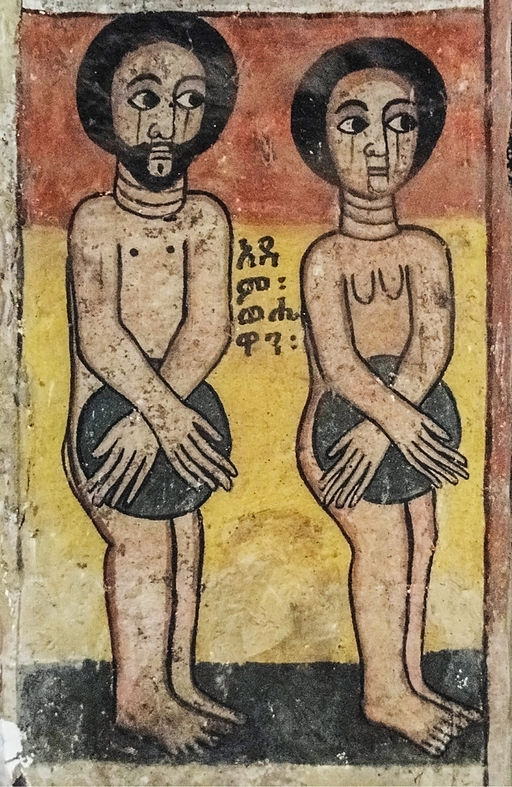
Man is different, very different.
We are created, and therefore our very being is derived, contingent, dependent. Every second of our life is within the hand of God. As a consequence of the Fall, we naturally want that which advances our own cause, protects our own self-defined rights. When we see it in others, we call it selfishness. When God observes it in us, He calls it sin. We are like God in that now we act independently, individualistically. However, rather than acting in total and perfect conformity with justice, we act in self-centred autonomy. In fact that last term is instructive for our understanding.
Autonomy
The word autonomy is derived from the Greek language where auto means self, and nomos means law. Therefore, to be autonomous is to be a law unto one’s self. God is a law unto Himself and the result is beautiful, majestic. When man is like God in the sense that he acts autonomously, the result is ugly and morally offensive. To himself and others. And, particularly to the Creator. The truth is that God is autonomous, and we benefit from Him being a law unto Himself. Morality is rooted in His righteous character.
Man is not autonomous – and when we constantly assert something that we are not, the outcome is invariably grotesque. Because He is self-existent, God’s knowledge – His knowing everything past, present, future and every possible contingency – is complete. Our knowledge is limited in many ways. Our brains are the size of pop cans. We have limited bandwidth. And we confuse what we know. We forget. And even on things that we do know, our knowledge is in many ways incomplete.
Man’s Tragic Experiential Knowing
Sometimes, incomplete knowledge is rendered broader by experience. And so it was with sin. God understood perfectly the consequence of disobedience, and He warned against it. Mankind understands, often tragically, through experiential knowing. In some ways, we can only know by experiencing. Some things, although the tasting broadens knowledge, should never be experienced. To experience is to regress; it drives the pain more deeply.

Satan told Eve, “God knows that when you eat from it your eyes will be opened, and you will be like God, knowing good and evil” (Genesis 3:5). What the serpent did not say was that this enhanced knowledge of evil would be destructive to our first parent’s relationship with their Creator.
The Result of Disobedience
Disobedience brought death. Man immediately began the process of dying, the separation of the soul from the body, and other forms of break-up. Francis Schaeffer explained the 4 dimensions of that death: hostility leading to estrangement between man and himself, between man and others, between man and the earth, and ultimately between man & God.
The Second Tree
And that leads us to the second tree. The Genesis narrative:
Then the LORD God said, “Behold, the man has become like one of us in knowing good and evil. Now, lest he reach out his hand and take also of the tree of life and eat, and live forever—” therefore the LORD God sent him out from the garden of Eden…(Genesis 3:22.23).
This banishment from the idyllic Garden is often seen as another component of the judgement of God on Adam’s sin. But rather than punishment, it illustrates God’s grace. In their now sinful condition, Adam and Eve’s access to the tree of life would have perpetuated the damaged and distorted life they were now living. The only escape from this brokenness was transition to eternal life in the presence of the Lord, the portal to which was available only through death. Sin introduced death. But God’s grace seized upon death as the transition to eternal life for those who trust God, who possess saving faith.
Takeaway:
In a way that Adam could never have understood, death lead to eternal life because of a yet-future event – the Cross of Christ. The God that created man in His own image, would later take on humanity, share in the human condition, and die as a criminal – to defeat sin, death, hell and the evil one.
Adam’s salvation was obtained the same way mine was – through Christ.
God enigmatically, yet mercifully chose to become man through the body of a woman, being born to a peasant teenaged girl that first Christmas, fulfilling the words of the prophecy within the curse: And I will put enmity between you and the woman, and between your offspring and hers; He will crush your head, and you will strike His heel (Genesis 3:15).

Would you like some prayer support? Contact us– we’d love to pray for you!



Leave a Reply